The best first move for erosion control on a slope is a plant-first plan paired with simple drainage fixes. Vegetation, drainage management, and structural measures are key tools, and most yards need vegetation and drainage management before structural measures. Guidance from University of Missouri Extension and the USGS supports this order, and Precision Outdoor Solutions can handle the work if you want help.
TL;DR:
- Direct downspouts to stable, vegetated ground; use swales where runoff concentrates, and keep infiltration features at least 10 feet from foundations with pretreatment and maintenance.
- Slopes steeper than 25% often warrant professional evaluation; new foundation or driveway cracks, sticking doors, or leaning trees can signal subsurface soil movement.
- Mulch or securely pinned blankets protect bare soil while plants establish, but perennial roots provide lasting stability after temporary cover breaks down.
- Reserve riprap for forceful outlets, channels, or slope toes, with filter fabric beneath; plants remain preferable where vegetation can withstand the flow.
Table of Contents
- Which methods stop slope erosion, and when do you use each?
- Which plants hold a slope, and how do you establish them?
- How do you manage drainage on a sloped yard?
- When do terraces and retaining walls make sense?
- How do blankets, geotextiles, and mulch fit in?
- When is rock or riprap the right choice?
- What are the warning signs that you need a professional?
- What should you do first, next, and later?
- How do we approach slope stabilization at Precision Outdoor Solutions?
- How can we help you stabilize your slope and fix drainage?
- FAQ
- Sources
Which methods stop slope erosion, and when do you use each?
Not every slope needs every fix. Here is a quick way to match a method to your situation:
- Vegetation: best for gradual slopes and as the long-term foundation for almost every yard.
- Drainage controls (swales, French drains, downspout extenders): best when water arrives in one concentrated stream.
- Mulching: best for bare soil that needs quick, low-cost cover.
- Erosion-control blankets and geotextiles: best for new seedings on steeper ground.
- Terraces and retaining walls: best for steep slopes where plants alone cannot hold the soil.
- Riprap: best for high-energy outlets and the toe of a slope.
Which plants hold a slope, and how do you establish them?
Plants are the long-term answer. Vegetative cover works like roof shingles, slowing runoff so more water soaks in instead of racing downhill. Deep-rooted native grasses, shrubs, and groundcovers bind the soil from below while their leaves break the force of raindrops above.
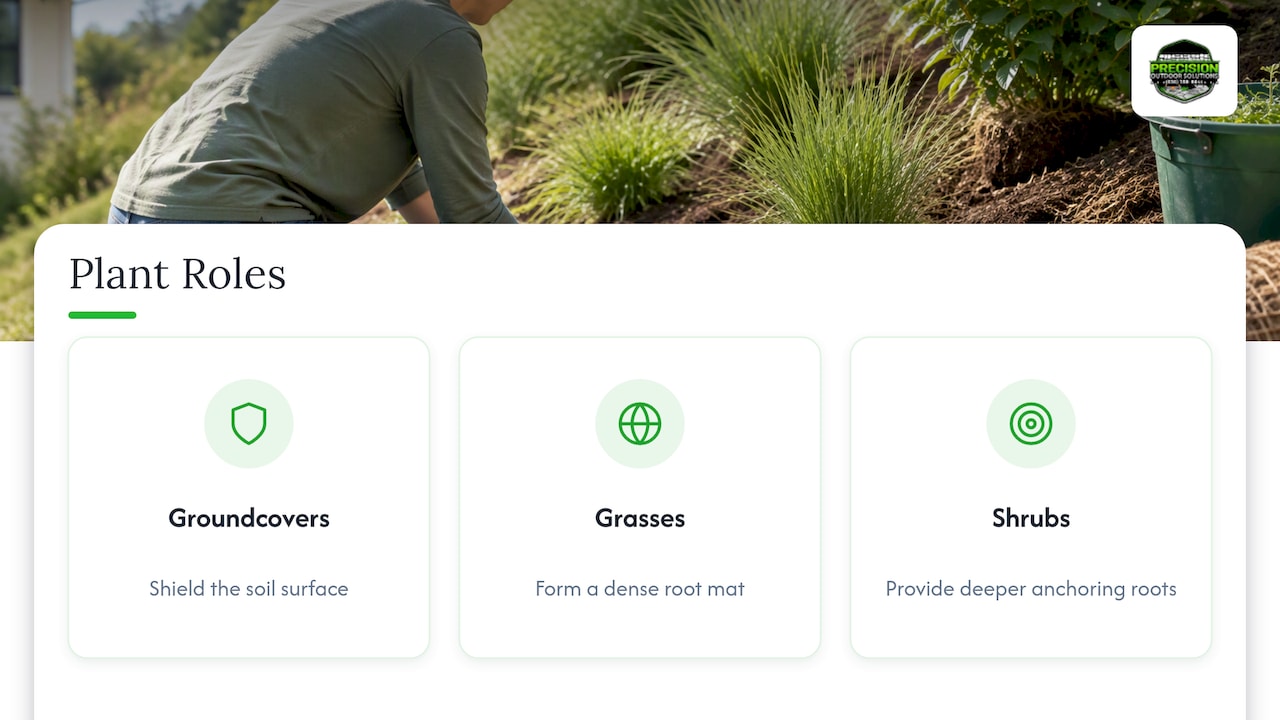
Each type has a job. Groundcovers shield the surface, grasses build a dense root mat, and shrubs add deeper roots that anchor the soil on steeper pitches. Mixing all three gives you cover, binding, and depth at once.
For establishment, you can seed with an erosion-control mix, or use plugs or rolled sod for faster cover. Anchor new seed with a blanket or a thick layer of mulch so the first storm doesn’t wash it away. Annual plants can protect the soil for up to 12 months, but permanent perennials are far better for stability over the years.
How do you manage drainage on a sloped yard?
Water that concentrates is what carves gullies, so slow it, spread it, and let it soak in. The cheapest fix is often the most effective: point downspouts onto stable, vegetated ground or into a rain garden instead of onto the slope. Our downspout drainage guide walks through the outlet options, and this gutter overflow guide from Capital Pro Pressure Washing explains why roof water often ends up where it shouldn’t.
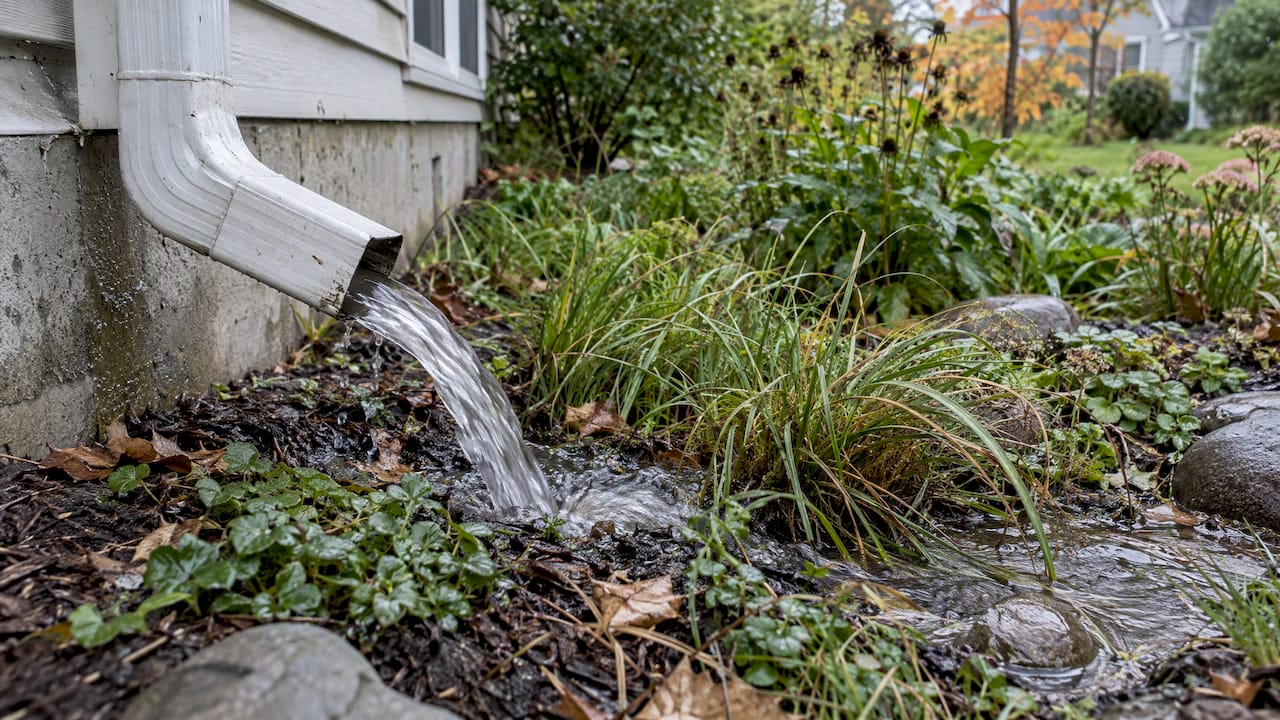
Where runoff has to travel, a grassed waterway spreads and slows it, which helps stop rills and gullies from forming. French drains and infiltration trenches handle water below the surface. According to the EPA on-lot treatment sheet, infiltration features belong at least 10 feet from building foundations, and they need pretreatment and regular maintenance so they don’t clog. See our swale design guide for sizing ideas.
Keep these basics in mind:
- Send roof water to stable, vegetated areas, never onto bare soil.
- Use swales or grassed waterways where flow concentrates.
- Pretreat water before it enters a trench or drain.
- Check every drainage feature after heavy storms.
Pro Tip: Fix the downspouts first. It costs little and often cuts the water reaching your slope more than any other single change.
When do terraces and retaining walls make sense?
Structures are for slopes that plants and drainage can’t handle alone. Per Pacific Northwest National Laboratory’s guidance, a grade steeper than 25 percent (4 feet horizontal per 1 foot vertical) is highly prone to erosion and often calls for professional evaluation, grading, or a retaining wall.
Terraces work by interrupting the slope. They intercept and slow surface water, though spacing, design, and upkeep matter. You can build vegetative terraces with planted strips or engineered ones with graded benches, and the right choice depends on your soil and pitch.
Retaining walls fix localized problems well, but University of Missouri Extension notes they are often costlier and less effective than continuous native vegetation, so a layered approach tends to win. USGS says there is no universal quick fix: each property has its own soil and water conditions, so get a qualified professional before major hillside changes. Our retaining wall planning guide covers what to ask and expect.
How do blankets, geotextiles, and mulch fit in?
Think of these as bandages while plants grow in. Blankets, geotextiles, and mulch shield bare soil and keep seed in place during the establishment period, when your slope is most likely to wash out.
Mulch helps newly planted ground hold moisture and resist crusting, and EPA WaterSense guidance says to anchor it on steep slopes. Lay blankets snug against the soil with no gaps underneath, and pin or stake them securely along the top and edges. A loose edge is how a blanket gets lost in the first heavy rain.
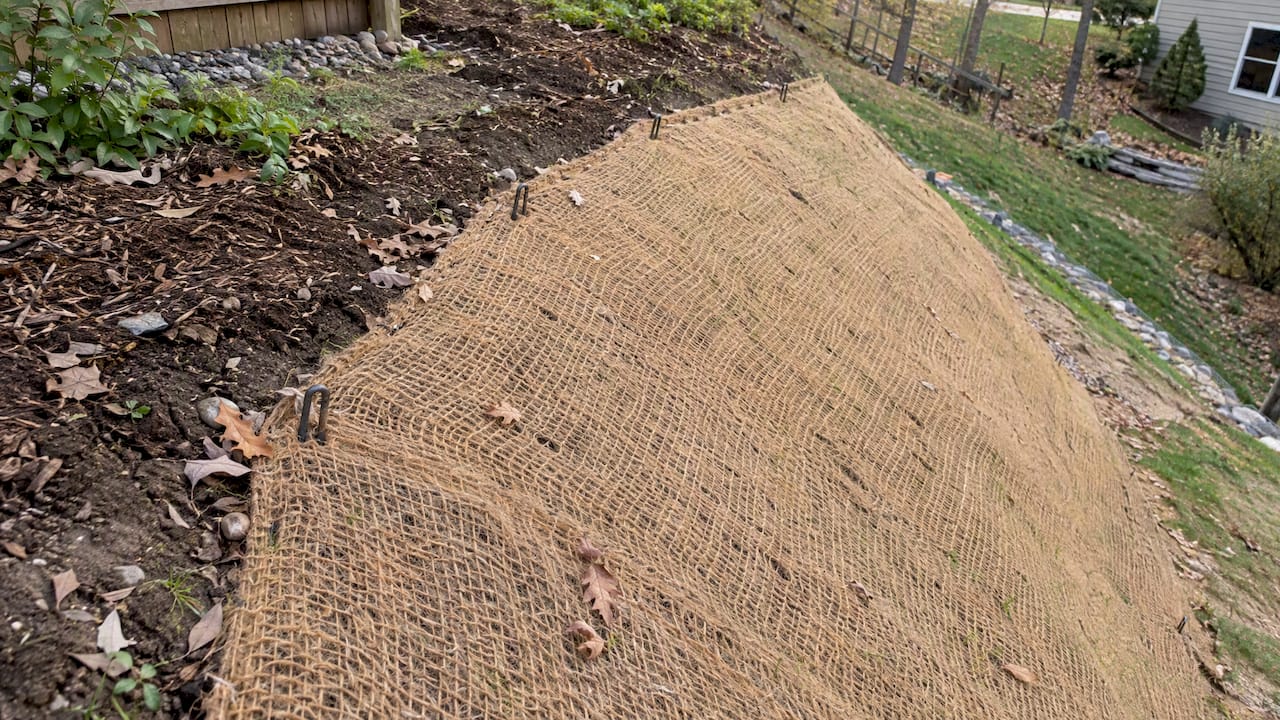
None of these is permanent. Once roots take hold, the plants become the real stabilizer, and the temporary cover can break down or be removed.
When is rock or riprap the right choice?
Rock earns its place where water moves with real force, such as a pipe outlet, a concentrated channel, or the toe of a slope. Place a filter fabric or graded filter layer under the stone, as University of Minnesota Extension advises, so soil doesn’t slip out from beneath it.
Choose rock over plants when flow is too strong for vegetation to survive. The trade-off is looks and cost: stone is less natural in a garden setting and can run higher than seeding. Sizing matters a lot, so have a professional design any rock work on exposed ground or near water.
What are the warning signs that you need a professional?
Some slope problems are too serious for a weekend project. Call a pro if you notice any of these, which USGS lists as early signs of subsurface soil movement:
- New cracks in your foundation or driveway
- Doors or windows that begin to stick
- Trees or utility poles starting to tilt
Also bring in a professional for slopes over about 25 percent, for concentrated runoff or a large drainage area, and for any slope that has failed before. Major work can need permits, so check local rules before you dig. If the ground is actively moving, stay clear and get expert help right away.
What should you do first, next, and later?
Work in order, starting with what costs the least and protects the most.
- Right away: Divert downspouts, cover bare soil with mulch or a blanket, and add perimeter sediment controls where soil could leave your lot.
- Within weeks: Seed or plant plugs, and shape small swales or grassed waterways where water gathers. Walk the slope after every storm.
- Over the season: Watch how plants establish, and fill in any thin spots.
- Later: Add terraces or a retaining wall only after a professional evaluates a steep slope.
- Ongoing: Re-inspect drains, refresh mulch, and repair small washouts early.
Pro Tip: Take photos of your slope after each big storm. Comparing them shows early trouble long before it becomes a repair.
How do we approach slope stabilization at Precision Outdoor Solutions?
After more than 25 years of building outdoor spaces, we’ve learned that durable work starts with water. We assess your site, fix drainage first, then plant or build to help the result last.
— Precision Outdoor Solutions
How can we help you stabilize your slope and fix drainage?
You shouldn’t have to guess whether your slope needs plants, a swale, or a wall. We bring durable craftsmanship and drainage-first planning to every yard, and we can build the plan with you from the first site visit. These services fit slope problems best:
- Yard Drainage Solutions in Wentzville, MO
- Hardscape & Patio Installation, including retaining walls
- Landscape Design

Ready to stop the washouts? Schedule a site consultation and we’ll walk your slope with you.
FAQ
What is the best erosion control for slopes?
Dense, deep-rooted native vegetation is the best long-term control for most slopes. University of Missouri Extension calls vegetative cover the most effective long-term method. Steeper or failing slopes may also need drainage work or a structure.
What is the best way to hold back soil on a slope?
Combine plants with proper drainage, and add a terrace or retaining wall when the grade is steep. Roots bind the soil, while drainage keeps water from undercutting it. Have a professional design any wall.
How do I stop runoff on my sloped yard?
Start by redirecting downspouts onto stable, vegetated ground. Then slow remaining water with a grassed swale or waterway so it spreads and soaks in instead of concentrating.
How can I prevent soil erosion on steep slopes?
Cover bare soil quickly with mulch or a blanket, then establish perennial plants. Slopes steeper than 25 percent usually need a professional evaluation before you commit to a fix.
Sources
- Controlling Runoff and Erosion at Urban Construction Sites | MU Extension
- Basc
- USGS Circular 1325: The Landslide Handbook—A Guide to Understanding Landslides
- NPDES: Stormwater Best Management Practice, On-Lot Treatment
Recommended
- Stop Yard Erosion This Weekend: Action First Fixes For Homeowners
- Solve Drainage First: Landscape Design Process For Homeowners
- Terraced Yard Ideas That Turn A Slope Into Usable Space
- Retaining Wall Drainage: A Practical Homeowner’s Guide
This article was prepared with AI assistance for general information. For recommendations specific to your property, contact Precision Outdoor Solutions. Call or text us at (636) 358-8644.