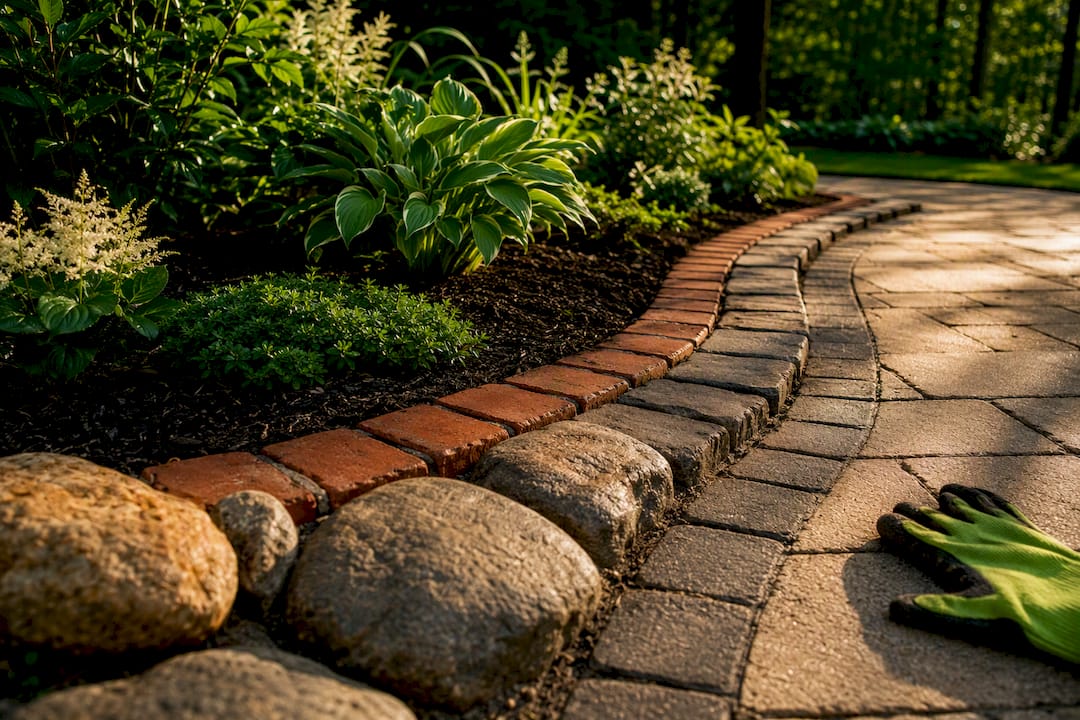
Precast concrete, poured concrete, natural stone, unit pavers, and wood or composite are the five main patio steps options, and gravel or stepping stones round out the list for gentle slopes. The right choice comes down to budget, site access, drainage needs, and how much upkeep you want later. Below, we break down each material, real cost ranges, code basics, and when to call a professional instead of tackling it yourself.
TL;DR:
- Precast concrete steps are rapid and budget-friendly but limited in size and heavy to set, often requiring professional assistance for larger units.
- Natural stone offers an upscale look but costs more for materials and base preparation and demands careful site excavation.
- Proper dimensioning and base prep are critical for safety, with riser heights kept below 7.75 inches and a firm, compacted foundation to prevent settling.
- Construction costs vary widely from $150 to $6,000 per step depending on material, shape, and site access, with simple straight runs on a stable base usually cheapest.
- Most municipalities impose permits for steps over 30 inches high or connected to structures, making site inspection and proper planning essential to avoid future problems.
Table of Contents
- Patio Steps Options by Material: What Fits Your Yard
- Getting the Dimensions and Safety Details Right
- What Patio Steps Actually Cost
- Ready-Made Steps: Precast and Modular Kits
- Maintenance: What Each Material Asks of You Later
- DIY vs. Hiring a Pro for Patio Steps
- Do You Need a Permit for Patio Steps?
- Precision Outdoor Solutions’ Perspective: Build for What You Can’t See
- How Precision Outdoor Solutions Can Help With Your Steps
- Sources
- FAQ
Patio Steps Options by Material: What Fits Your Yard
Every material on this list solves a different problem, and matching the right one to your site saves money and headaches down the road.
- Precast concrete steps are factory-cast units delivered ready to set. They’re budget-friendly and quick to install, but they’re heavy, limited to standard sizes, and need a truck and sometimes a crane for larger units.
- Poured concrete lets you build custom shapes and curves, and it takes stamped or exposed-aggregate finishes well. It costs more in labor because forms have to be built and cured on-site.
- Natural stone (flagstone, limestone, bluestone) gives you the most upscale look, but it demands careful base prep and runs the highest material cost of the bunch. It fits rustic cottage gardens and formal entries alike, depending on the cut.
- Unit pavers or brick work well for curved or irregular step runs because the modular pieces bend around a path naturally. Expect to redo joint sand or polymeric filler every few years.
- Wood and composite steps suit decks and short stoops, adding warmth that concrete can’t match. Wood needs staining and occasional board replacement; composite costs more upfront but skips most of that maintenance.
- Gravel and stepping stones are the cheapest landscaping patio steps for a gentle slope, though they read as informal and depend on solid drainage to keep from washing out.
Design cohesion matters as much as material choice. UC ANR’s hardscape planning guidance recommends repeating a material already used on your patio or walkway so the steps look like part of the yard instead of an afterthought. Curved step layouts read as relaxed and natural, while sharp geometric edges signal a more formal patio step design.
Getting the Dimensions and Safety Details Right
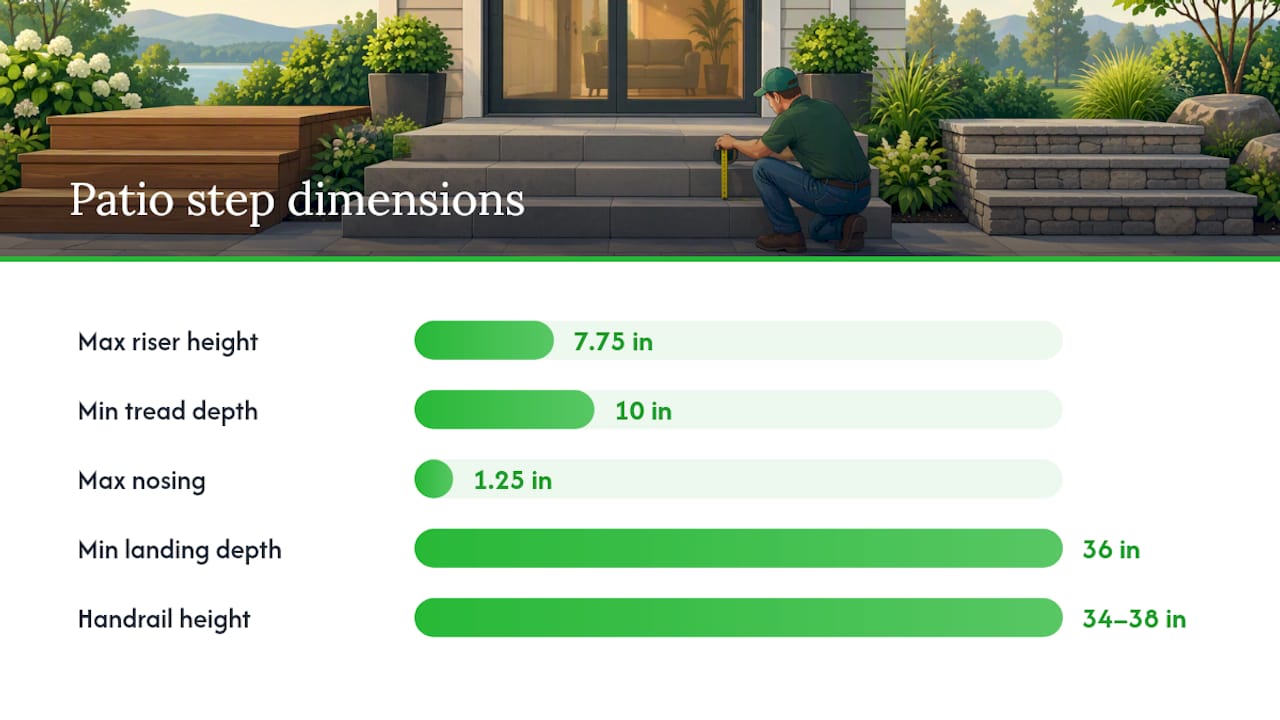
Comfortable, code-compliant patio steps dimensions follow a narrow range for a reason: too steep and people trip, too shallow and the run eats up your yard. Exterior stair guidance based on the International Residential Code, as outlined in Boulder, Colorado’s stairway and handrail guidelines, points to a maximum riser height around 7.75 inches and a minimum tread depth around 10 inches, with nosing typically limited to no more than 1.25 inches where used.
A few rules to build around:
- Keep riser height consistent across the whole run. Even a half-inch difference between steps is a common trip hazard.
- Landings should be at least as wide as the stairway and deep enough for a full stride, generally a minimum of 36 inches.
- Handrails are typically required once a run climbs beyond a certain number of risers, and graspable rail height usually falls between 34 and 38 inches.
- Add step lighting and a slip-resistant surface finish, especially near entries used after dark.
Base prep decides whether any of this holds up. Steps set on compacted base rock stay level for years; steps set on native soil without compaction tend to settle unevenly within a season or two, according to Oregon State Extension’s paver installation guide.
What Patio Steps Actually Cost
Budget is usually the deciding factor between poured concrete, precast, and stone, and the spread between them is wide. Angi reports installed concrete steps commonly run between $400 and $6,000, with the difference driven mostly by size, finish, and site access rather than the concrete itself.
| Material | Typical Cost Range | Notes |
|---|---|---|
| Precast concrete | $150–$400 per step, plus setting | Fast install; delivery often adds $150–$400 |
| Poured concrete | $400–$6,000 installed | Custom shapes and stamped finishes push costs toward the top of the range |
| Natural stone | Higher than concrete per step | Material and base prep both add cost |
| Wood/composite | Moderate, varies by lumber grade | Composite costs more upfront, less over time |
| Gravel/stepping stones | Lowest of all options | Best for gentle grades with good drainage |
BuildRefs’ cost calculator also confirms standard step dimensions, a 7-inch rise and 11 inch tread, as the baseline most contractors price against. Labor typically outweighs material cost on any custom or curved run, so a simple straight run of precast units almost always beats poured concrete on price. Paying more for poured or stone pays off when you want a specific shape, a matched finish to existing hardscape, or a design meant to last decades without replacement.
Ready-Made Steps: Precast and Modular Kits
Precast concrete units come cast at a factory and arrive ready to drop into place, which is why they’re often the fastest patio steps options for a straightforward stoop or side entry.
- Precast units save labor time because there’s no on-site curing, but they’re heavy. Larger units need professional setting, and uneven base compaction can cause even factory-made units to shift or sink over time.
- Modular timber or metal step kits work well for short landscape stoops or garden paths, often bolting or stacking together without concrete work.
- Prefab options run into trouble on curved runs, wide multi-step landings, or any site needing a custom-shaped landing. Those situations usually call for poured concrete instead.
If your site involves a slope or an elevation change beyond a single step, it’s worth looking at terraced yard ideas that pair steps with retaining walls rather than forcing a tall single flight.
Maintenance: What Each Material Asks of You Later
Durability and maintenance go hand in hand, and the two extremes on this list are wood and natural stone. Mississippi State Extension notes that stone, brick, and concrete generally need less upkeep than wood, which often costs more in repairs over a decade than it saved upfront.
- Concrete benefits from resealing every few years to resist cracking from freeze-thaw cycles in colder climates.
- Pavers need joint sand or polymeric filler refreshed periodically to keep weeds and shifting in check.
- Wood requires staining or sealing yearly and board replacement as rot sets in near ground contact.
- Stone holds up well but can heave in freeze-thaw regions without a properly drained base.
Pro Tip: Walk your steps after the first hard freeze each winter and check for hairline cracks or slight movement at the base. Catching a small settling issue in year one is far cheaper than rebuilding a step in year five.
DIY vs. Hiring a Pro for Patio Steps
A short, honest self-check saves a lot of regret. Here’s how to know which side of the line your project falls on:
- Single precast step or a run of stepping stones on flat, stable soil? Reasonable for a confident DIYer with a helper for lifting.
- Poured concrete, a multi-step run, or heavy precast units needing equipment? Hire a pro. Forming, curing, and leveling take experience most homeowners don’t have.
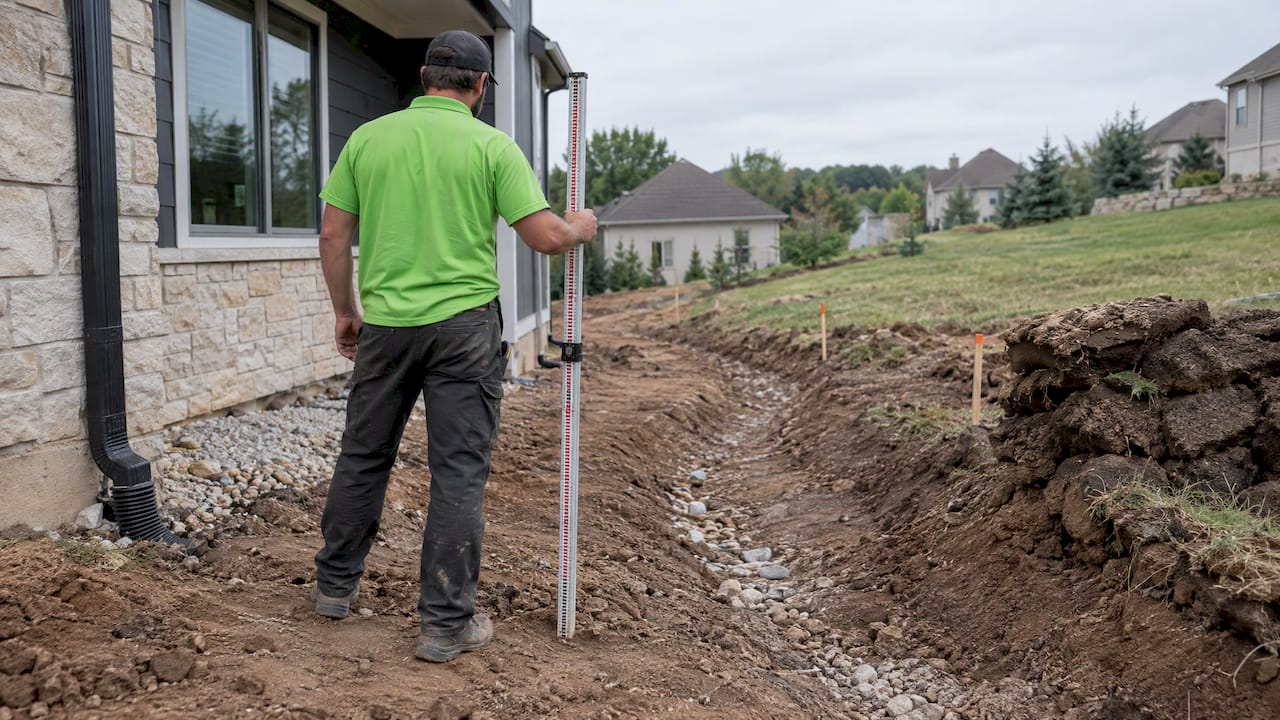
- Any work touching drainage, a slope, or unknown soil conditions? Hire a pro. Guessing wrong here leads to settling or water pooling against your foundation.
- Does the site need a retaining wall or grading beyond the steps themselves? That’s a clear signal to bring in a contractor.
If you hire out, ask about base prep method, whether the work carries a warranty, who pulls the permit, expected timeline, and references from similar jobs.
Do You Need a Permit for Patio Steps?
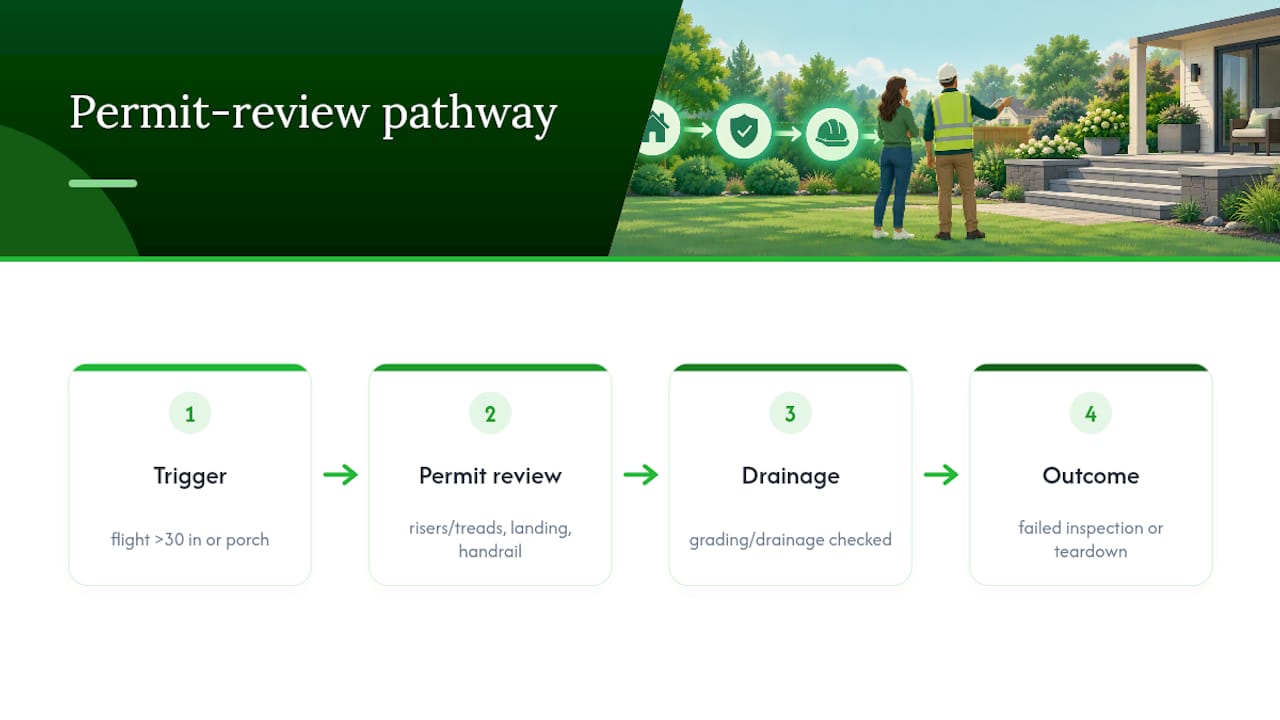
Most municipalities require a permit once steps exceed a certain rise, typically when a flight climbs beyond 30 inches total or connects to a structure like a deck or porch. Requirements vary by city and county, so check with your local building department before pouring concrete or setting precast units, especially if the steps tie into an existing patio slab or affect a property line setback.
Permit review usually checks the same items covered under IRC-based stair guidance: riser and tread consistency, landing size, and handrail requirements where the run is long enough to need one. Skipping a required permit can create problems later, from failed home inspections at resale to forced teardown if the work doesn’t pass a later review. Drainage is often part of that review too, since grading changes near a foundation can trigger separate stormwater rules in some jurisdictions.
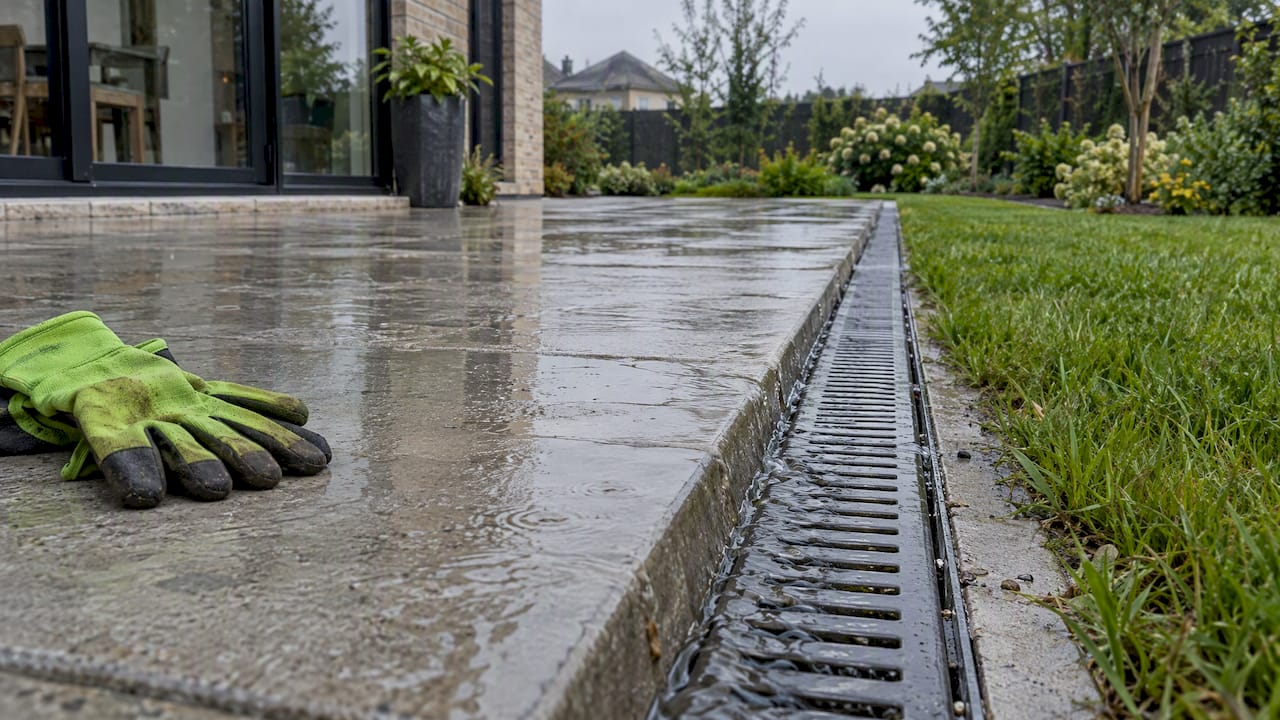
If your project also involves regrading or redirecting runoff, it’s worth reviewing it alongside your patio drainage plan before you file for a permit, since the two are often inspected together. When in doubt, a quick call to your local permit office before you start digging is cheaper than a redo after the fact.
Precision Outdoor Solutions’ Perspective: Build for What You Can’t See
Most patio step disappointments trace back to two things nobody budgeted for: what’s under the slab and where the water goes. We’ve seen beautiful stone steps crack within two years because the base wasn’t compacted properly, and precast units that shifted because nobody checked drainage before setting them. Material choice gets all the attention in the planning stage, but base prep and grading decide whether that choice still looks good in year five.
Before any consult, it helps to have a few things ready: photos of the site from a couple of angles, any material samples you’re drawn to, notes on where water tends to pool after rain, and a rough budget range. That short list turns a first conversation into a real plan instead of a guessing game.
— Precision Outdoor Solutions
How Precision Outdoor Solutions Can Help With Your Steps
Homeowners often prefer steps that are built once, built right, and tied into the rest of the patio instead of bolted on as an afterthought. Where a big-box contractor might quote a step count and move on, our team looks at grading, drainage, and how the finish matches the rest of your hardscape before we ever pour concrete.

Our Hardscape & Patio Installation service covers everything from a single precast entry step to a full poured or stamped concrete run, and our Concrete Services team handles custom finishes when you want more than a standard gray slab. If drainage near your steps is already a known problem, our Yard Drainage Solutions work pairs naturally with a step rebuild so you’re not solving the same water problem twice. For finishing touches around your new steps, outdoor rug options built to hold up outside can add color to a landing without sacrificing durability.
If you are located in the Wentzville or St. Charles County area, consider reaching out to a local outdoor living contractor for an estimate and site walk before designing your patio steps.
Sources
- Planning your hardscape | UC ANR – Real Dirt
- Home landscape design | Mississippi State Extension
- How Much Do Concrete Steps Cost? | Angi
FAQ
Can You Buy Ready-Made Outdoor Steps?
Yes, precast concrete steps come factory-cast and ready to set, and modular timber or metal kits exist for short landscape stoops. Larger precast units still need delivery and professional setting, which can add $150 to $500 in fees on top of the unit price.
What Are Some Alternatives to Concrete Steps?
Natural stone, unit pavers or brick, wood, composite decking material, and gravel or stepping stones all work as alternatives to concrete. Stone and pavers tend to need less long-term upkeep than wood, according to Mississippi State Extension, while gravel steps cost the least but suit only gentle slopes with good drainage.
What Are Some Budget-Friendly Ideas for Patio Stairs?
Gravel with landscape timbers or flat stepping stones is typically the cheapest option for a gentle grade, and precast concrete units come in next for a straightforward flat run. Sticking to a straight, single-width run instead of a curved or wide design also keeps labor costs down since labor usually outweighs material cost on custom shapes.
What Is the Cheapest Way to Build Outdoor Stairs?
Setting precast concrete units or flat stepping stones on a properly compacted gravel base is usually the least expensive route, especially for a single step or short run. Skipping the base compaction to save money almost always costs more later, since poor base prep is a leading cause of settling and shifting.
Do Patio Steps Need a Permit?
Many municipalities require a permit once a flight of steps exceeds around 30 inches of total rise or connects to an attached structure like a deck. Requirements vary by city and county, so check with your local building department before starting any poured concrete or precast installation.
Recommended
- 5 Patio Repair Options For Homeowners: DIY Fixes Or Call A Pro
- Fire Pit Patio Ideas For Homeowners: Design And DIY Checklist
- 25+ Years: Stamped Concrete Problems Contractor Tips For Homeowners
- Stamped Concrete Cost: 2026 Pricing Guide For Homeowners
This article was prepared with AI assistance for general information. For recommendations specific to your property, contact Precision Outdoor Solutions. Call or text us at (636) 358-8644.