Installed fence costs generally run from $15 to $60 per linear foot depending on the material you pick, and that range is wide on purpose because chain link, wood, vinyl, aluminum, wrought iron, and composite each carry very different material and labor demands. “Installed” means materials plus labor together; it typically excludes permit fees, old fence tear-out, or major grading unless your contractor spells that out in the quote.
Here’s the quick breakdown by material, based on standard residential heights and typical 2026 installed pricing:
- Chain link: $10 to $25 per linear foot
- Pressure-treated pine: $15 to $30 per linear foot
- Cedar privacy: $20 to $35 per linear foot
- Vinyl (PVC) privacy: $20 to $40 per linear foot
- Aluminum ornamental/pool fence: $25 to $50 per linear foot
- Wrought iron/steel: $30 to $60 per linear foot
- Capped composite: $30 to $55 per linear foot
A national data point worth knowing: installed fence prices commonly average between $23 and $33 per linear foot across all material types, with a typical single-family project landing between roughly $3,200 and $6,800 once you account for gates, posts, and site conditions. That’s a big enough spread that two contractors quoting the same 150-foot backyard fence can land $1,000 or more apart and both be reasonable.
Key Takeaways
Installed fence cost per linear foot depends far more on site conditions, height, and gate count than on the base material price alone.
| Point | Details |
|---|---|
| Know your material range | Installed costs run $10 to $60 per linear foot depending on material, with chain link cheapest and wrought iron priciest. |
| Height changes everything | Moving from a 4-foot to a 6-foot fence can add 25% to 60% to your installed cost. |
| Budget beyond the base number | Add gates, tear-out, permits, and a 10% to 15% contingency before trusting a per-foot quote. |
| Compare bids line by line | Ask about post depth, concrete volume, and gate hardware inclusion to spot incomplete or unrealistic quotes. |
| Get a local, itemized estimate | Precision Outdoor Solutions offers site consultations across St. Charles County to turn per-foot ranges into a real project number. |
Table of Contents
- How Much Does Fence Cost Per Foot by Material?
- What Drives Fence Cost Per Linear Foot Up or Down?
- How Does Labor Split From Materials in a Fence Quote?
- Is DIY or Professional Fence Installation Cheaper?
- What Does a 200-Foot Fence Project Actually Cost?
- How Do You Get an Accurate Fence Quote?
- How Much Does Fence Maintenance Add to Long-Term Cost?
- Why Do Fence Quotes for the Same Job Vary So Much?
- A Contractor’s Take on Budgeting for a Fence
- Get a Dependable Fence Quote From Precision Outdoor Solutions
- Sources
How Much Does Fence Cost Per Foot by Material?
Every material has a different personality when it comes to pricing. Chain link wins on budget but loses on privacy and curb appeal. Wrought iron looks incredible but asks the most of your wallet. Here’s how the numbers actually shake out once labor gets added to materials.
A few things jump out once you line these up side by side. Chain link’s materials-only cost is genuinely cheap, which is why it dominates budget projects and rental properties. Vinyl and aluminum shift more of their total cost into materials rather than labor, since panelized systems install faster than hand-built wood fences. That labor savings gets eaten up by higher upfront material pricing, so the total often ends up similar to a mid-grade wood fence anyway.
If you’re fencing a pool, aluminum is worth a specific mention. Most municipalities require self-closing, self-latching gates and specific picket spacing to meet pool safety codes, and that hardware adds to the per-foot number beyond what a standard yard fence would cost.

What Drives Fence Cost Per Linear Foot Up or Down?
Two homeowners on the same street can get wildly different quotes for what sounds like an identical project. The material is only part of the story. These variables move the per-foot number more than most people expect:
- Height. Going from a 4-foot fence to a 6-foot fence typically adds 25% to 60% to the installed cost, depending on material, because taller sections need bigger posts, more material per run, and more labor to set them plumb.
- Post spacing and size. Wider spacing means fewer posts (cheaper), but it can compromise strength in high-wind areas; tighter spacing costs more but holds up better over time.
- Soil and terrain. Rocky, clay-heavy, or sloped ground can add a 10% to 30% premium because crews spend extra hours hand-digging or renting equipment to break through obstructions.
- Gate count and hardware. Each gate adds a variable cost depending on width, material, and whether it’s manual or automated.
- Tear-out and disposal. Removing an old fence before installing a new one typically adds some additional cost per linear foot.
- Permits and HOA review. Municipal permit fees vary and can add to the overall cost in most areas, but HOA approval delays can push a project back weeks and sometimes force a costlier, “approved” material choice.
- Finish work. Staining, painting, or sealing at installation adds labor hours that may appear as separate costs, not folded into the base price.
- Access and staging. A fence line blocked by a narrow gate, steep grade, or no truck access means more manual labor and higher cost.
- Local labor market. Crew wages vary enough by region to shift the labor half of your bid by double digits.
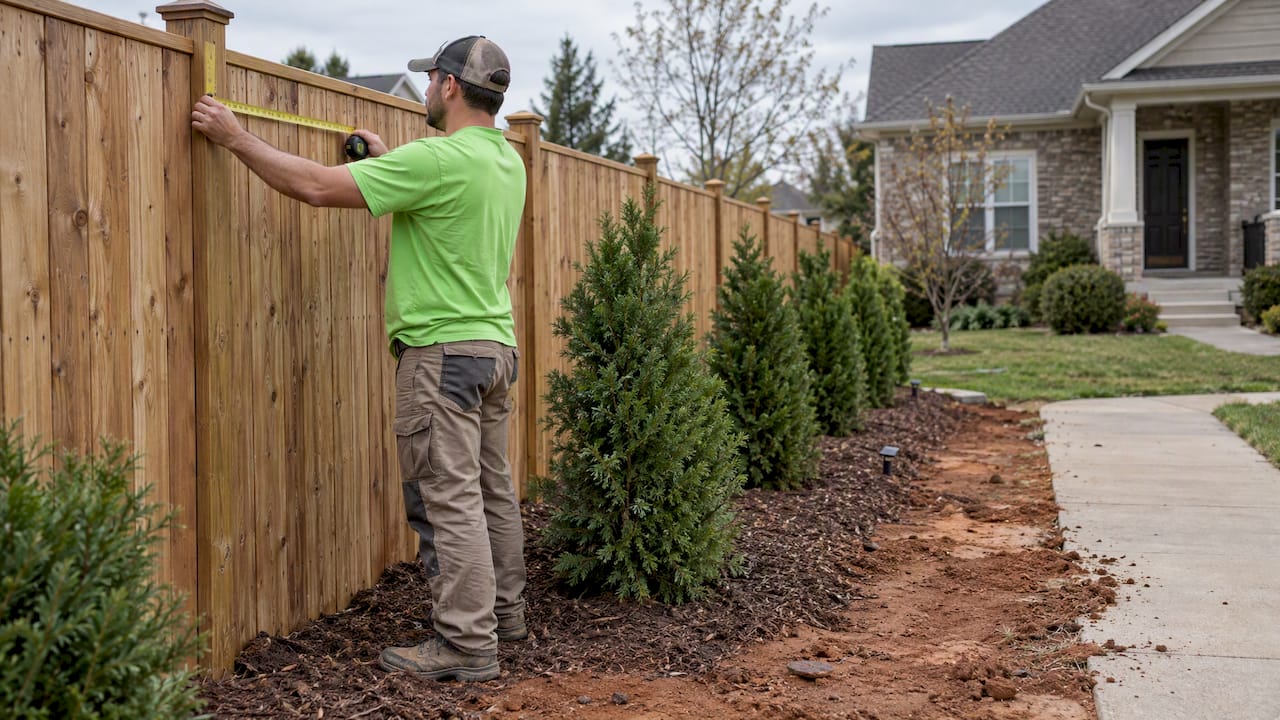
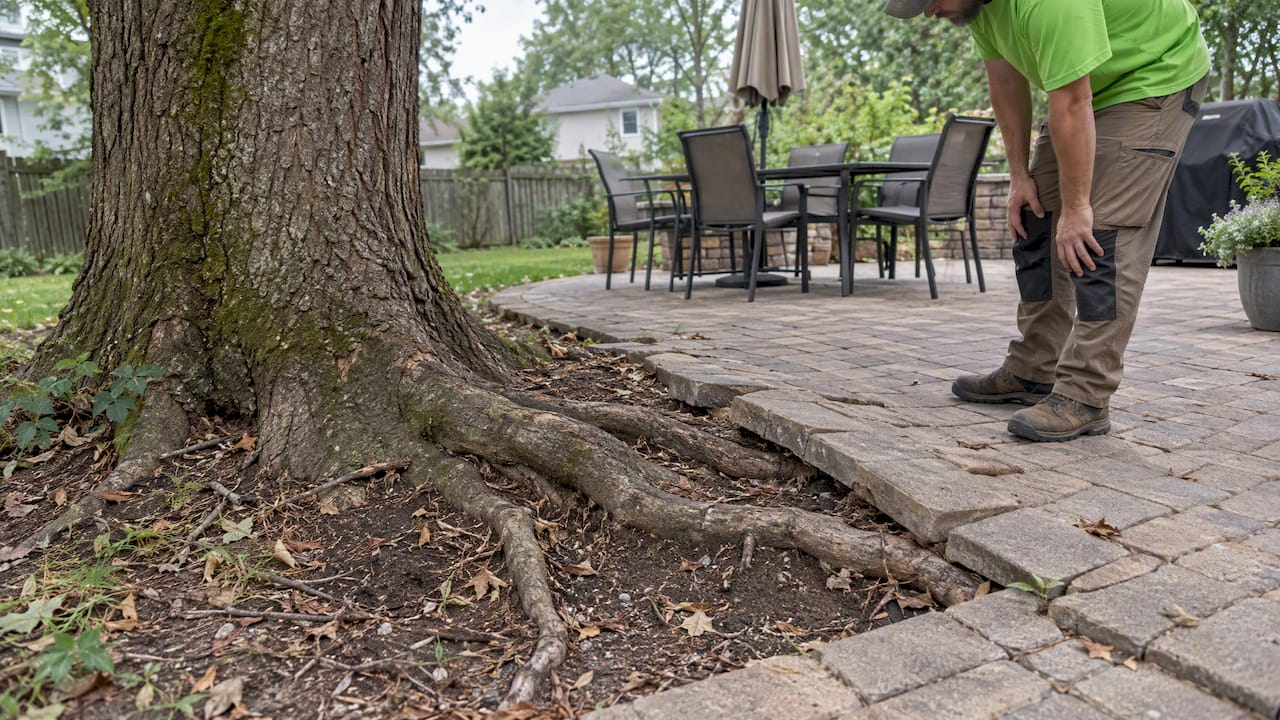
Pro Tip: Before you request quotes, walk your fence line yourself and flag anything unusual, like exposed roots, a slope, or a spot where you suspect buried utility lines. Call 811 to get utilities marked, and mention any terrain issues upfront so every contractor bids on the same real conditions instead of guessing.
How Does Labor Split From Materials in a Fence Quote?
Materials and labor aren’t a fixed 50/50 split. It shifts based on how much hand-building a fence requires versus how much comes pre-manufactured.
| Fence Type | Materials Share | Labor Share | Why |
|---|---|---|---|
| Wood (pine/cedar) | ~50% | ~50% | Hand-cut posts, rails, and pickets require significant on-site labor |
| Chain link | ~50% | ~50% | Simple materials, but post-setting still eats labor hours |
| Vinyl/aluminum (panelized) | 55%–60% | 40%–50% | Pre-manufactured panels install faster |
| Wrought iron (custom) | 40%–50% | 40%–50% | Custom fabrication can shift either way depending on design complexity |

The labor-and-materials breakdown holds up across most residential jobs, but regional wage rates change the dollar figures behind those percentages significantly. Wage data for landscaping and construction trades shows meaningful spread by metro area, and that spread translates directly into your per-foot labor cost.
What pushes labor costs higher regardless of region:
- Concrete footings instead of simple tamped-earth post setting.
- Driven posts in rocky soil that require an auger or jackhammer attachment.
- Difficult site access that forces crews to hand-carry materials instead of using a truck or Bobcat.
- Fence lines longer than a single day’s work, which adds mobilization costs.
That gap alone can explain why a friend three states away got a quote for half of what you’re seeing.
Is DIY or Professional Fence Installation Cheaper?
The honest answer is: it depends on your fence line, not just your comfort with a shovel.
DIY tends to make financial sense when:
- The run is short (under 100 feet) and on flat, easy-to-dig ground.
- You’re installing a simple wood picket or basic chain link.
- You already own or can cheaply rent a post-hole digger, level, and concrete mixing tools.
- You have realistic time available. A weekend project can stretch into three weekends once you factor in curing time for concrete footings.
Hiring a professional usually pays off when:
- You’re installing a tall privacy fence with heavy posts that need proper depth and concrete footings for stability.
- Your soil is rocky, clay-heavy, or has a history of drainage problems.
- Your HOA requires approved materials, setback distances, or a permit that a licensed contractor handles routinely.
- The project includes large gates, automated hardware, or integration with existing retaining walls or grading work.
Pro Tip: When you’re weighing your own labor against a contractor quote, price out tool rental, your actual hours at a realistic hourly rate, and the cost of doing it wrong once. A crooked post line or a footing that heaves in winter frost often costs more to fix later than it would have cost to hire a pro from the start.
What Does a 200-Foot Fence Project Actually Cost?
Numbers on a per-foot basis only mean something once you attach them to a real project. Here’s how the math plays out for three common materials across three common project lengths.
Here’s a step-by-step example so you can run this same math on your own yard. Say you’re pricing a 200-foot cedar privacy fence, 6 feet tall, with two gates:
- Base materials: 200 ft x $15/LF (materials-only) = $3,000.
- Base labor: 200 ft x $17/LF (labor-only) = $3,400.
- Posts and concrete: roughly 34 posts at 6-foot spacing, at $25 per post including concrete = $850.
- Gates: two 4-foot gates at $300 each = $600.
- Tear-out of old fence: 200 ft x $3/LF = $600.
- Permit fee: flat $75 municipal fee.
- Contingency (10%): add roughly $850 to cover any surprise, like a rock bed or an extra post needed on a slope.
Adding those line items together lands you around $9,375, well above the generic “200-ft privacy fence” range you’d see in a quick online search, because gates, tear-out, and a contingency buffer aren’t always included in the headline number. That gap between a bare $/LF estimate and a real total is exactly why line-item quotes matter more than a single per-foot figure.
How Do You Get an Accurate Fence Quote?
A vague quote is the single biggest source of budget surprises. Arm yourself with real measurements and a checklist before you call anyone.
Measure and document first:
- Walk the full fence line and measure total linear feet, not just the front yard, accounting for every side you want enclosed.
- Locate your property corners using existing markers, a plat map, or a survey if you have one.
- Call 811 (or your local utility-marking service) to flag buried lines before any digging starts.
- Note slope, low spots, tree roots, or rock outcrops along the line.
- Count and measure gate openings separately, since gate width affects hardware cost.
Ask every bidding contractor the same questions:
- How deep will posts be set, and what’s the concrete volume per post?
- What’s the exact post spacing, and does it change with height or wind exposure?
- Is gate hardware, including latches and hinges, included in the quoted price?
- What warranty covers materials versus labor, and for how long?
- Are they licensed and insured, and can they provide proof?
- Who handles tear-out and disposal of the old fence, and is that itemized separately?
- Who pulls the permit, and is that fee included in the quote?
Compare bids line by line rather than by the bottom-line number alone. A quote that’s dramatically lower than the others is the biggest red flag in fencing, especially when the scope description is vague or missing entirely. If one bid doesn’t mention tear-out, permits, or gate hardware, that’s not necessarily a lower price. It’s often an incomplete one.
How Much Does Fence Maintenance Add to Long-Term Cost?
The cheapest fence to install isn’t always the cheapest fence to own. Maintenance costs compound over the years you keep it, and that changes which material actually delivers the best value per foot.
| Material | Expected Lifespan | Typical Maintenance | Approx. Annual Cost |
|---|---|---|---|
| Pressure-treated pine | 10–15 years | Staining/sealing every 2–3 years | $1–$2/LF/year |
| Cedar | 15–20 years | Staining/sealing every 2–3 years | $1–$2/LF/year |
| Chain link | 15–20 years | Minimal; occasional tension adjustment | Under $0.25/LF/year |
| Vinyl (PVC) | 25–40 years | Occasional washing | Under $0.25/LF/year |
| Aluminum | 20–30 years | Rust spot touch-ups occasionally | $0.25–$0.50/LF/year |
| Wrought iron/steel | 20–30 years | Repaint every 5–7 years | $1–$3/LF/year |
| Composite (capped) | 25–30 years | Occasional washing | Under $0.25/LF/year |
Here’s where lifecycle math changes the decision: a wood fence and a vinyl fence at similar upfront installed cost per foot tell very different stories over 20 years. Wood needs staining roughly every 2 to 3 years at $1 to $2 per linear foot each time, which adds up to $6 to $14 per linear foot in maintenance alone across two decades. Vinyl’s upfront premium of a few dollars per foot usually gets absorbed by year 12 to 15 of ownership, after which it’s the cheaper fence to have owned.
Budget for these recurring items regardless of material:
- Post-storm inspection and hardware tightening (free, but do it annually).
- Gate hinge lubrication and adjustment ($0 to $50/year in materials).
- Stain or sealant reapplication for wood (every 2 to 3 years).
- Rust treatment for metal fences in humid climates (as needed).
Why Do Fence Quotes for the Same Job Vary So Much?
If you’ve gathered three quotes for the same fence and gotten three very different numbers, you’re not imagining it. This is one of the most common frustrations homeowners run into, and it comes down to how contractors estimate labor, not just what they charge for materials.
Post-digging and setting time is often the single biggest labor variable on a residential fence job, commonly making up around 60% of total labor hours on typical wood or chain-link installs. Two crews can look at the same soil and estimate wildly different dig times, and that difference alone can swing a bid by thousands of dollars.
Consider three real-world quotes for the same 200-foot cedar privacy fence:
- Quote A: $6,800. Standard tamped-earth post setting, one gate, no tear-out included, permit not mentioned.
- Quote B: $9,200. Concrete footings on every post, two gates with upgraded hardware, tear-out of the old fence included, permit fee included.
- Quote C: $5,900. Vague scope description, no mention of post depth or concrete, tear-out listed as “extra if needed.”
Quote C looks like the deal. It’s usually the trap. Contractors with lower overhead, less insurance coverage, or a habit of underestimating soil difficulty often bid low and either cut corners in the field or come back with change orders once the real digging starts. Quote B, despite being the highest number, is the most complete scope and the one most likely to match what actually shows up on your property.
Pro Tip: Ask every contractor for photos of a similar completed job and at least one recent customer reference. A contractor with nothing to show for a “200-foot cedar privacy fence” they claim to have built regularly should raise questions before you sign anything.
A Contractor’s Take on Budgeting for a Fence
Most homeowners budget for the fence they can see in their head, not the ground they’re actually going to dig into. That’s the mistake I’d flag first. A privacy fence quote that looks great on paper can fall apart the moment a crew hits clay soil or an old concrete footing three feet down, and suddenly you’re paying for equipment rental or extra labor hours that never showed up in the original number.
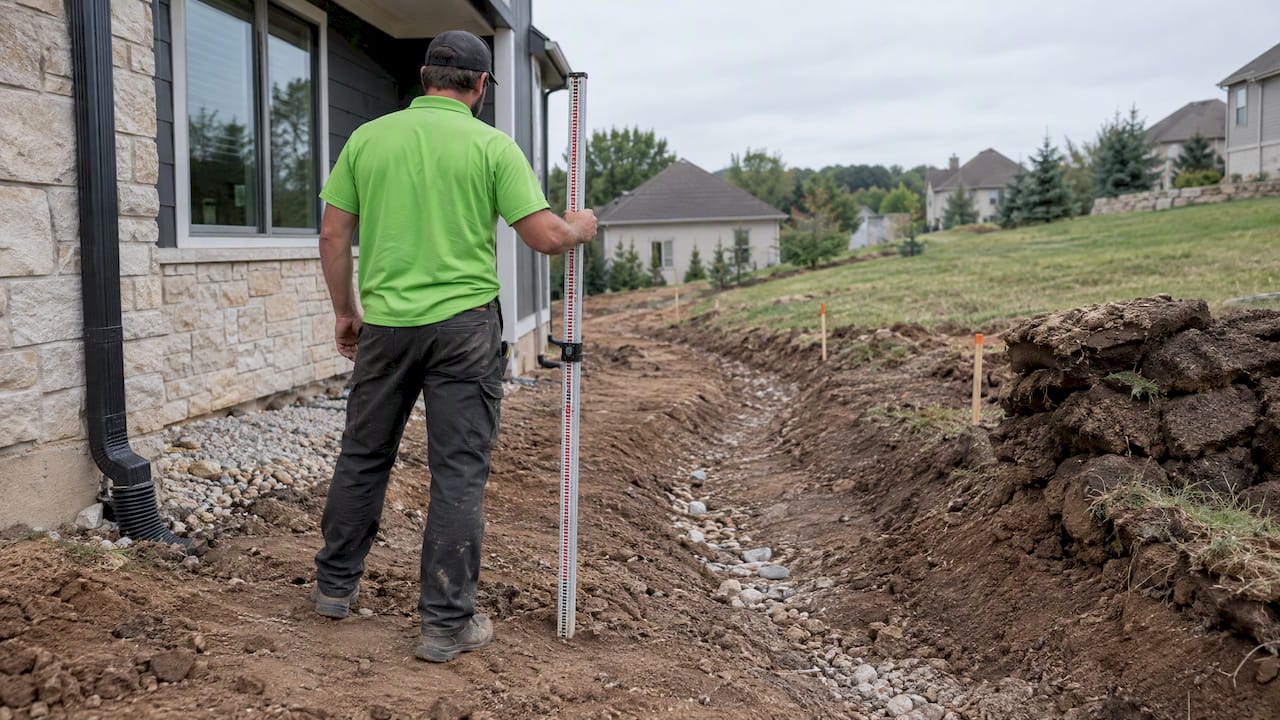
My advice: build a 10% to 15% contingency into your budget from day one, not as an afterthought if something goes wrong. Prioritize site prep and drainage before you fall in love with a specific material. A gorgeous cedar privacy fence installed over ground that floods every spring is a fence you’ll be repairing, or replacing, well before its expected lifespan runs out. And match your material choice to how long you actually plan to own the property. If you’re moving in five years, a mid-grade wood fence might make more financial sense than paying a vinyl premium you won’t stick around long enough to recoup.
Precision Outdoor Solutions has spent more than 25 years building outdoor projects across St. Charles County, and the fence jobs that go smoothly are almost always the ones where drainage, grading, and site conditions got evaluated honestly before the first post ever went in the ground.
Get a Dependable Fence Quote From Precision Outdoor Solutions
Every range in this guide is a starting point, not your actual number. The only way to know what your fence line will really cost is a site visit from someone who accounts for your soil, your slope, and your specific gate and privacy needs before quoting a price. Precision Outdoor Solutions has spent over 25 years serving Wentzville, St. Peters, O’Fallon, Troy, and the rest of St. Charles County, and fencing is one piece of a broader approach that also covers drainage, grading, and site prep, the exact factors that turn a clean per-foot estimate into a fence that actually holds up.

We handle the parts homeowners rarely think about until they’re a problem: locating utilities, checking soil conditions, integrating drainage where a fence line crosses a low spot, and navigating permit or HOA requirements before installation day. Our clients get a design conversation, not just a number over the phone, and every project is built with the same attention to detail we bring to patios and retaining walls.
If you’re ready to turn these ranges into a real number for your property, request a free site consultation through our fencing and landscaping services page and we’ll walk your fence line with you before we put a price on paper.
Sources
- Fence Installation Cost 2026: $15-$60 Per Linear Foot | Buildermuse
- Fence Installation Cost Factors: Labor, Materials, and Regional Pricing | Fence Installation Authority
- Fence Installation Cost Calculator 2026 — By Material & Linear Foot | CostPrism
- How Much Does Fence Installation Cost? 2026 Data | Angi
- BLS Occupational Employment and Wage Statistics (relevant classification) — May 2023